Arabic and English menus in the UAE: the rules and the translation mistakes to avoid
In the UAE an Arabic menu is not a courtesy. The Dubai Food Code asks restaurants and cafeterias to have their menu printed in both Arabic and English, and many of your guests will read the Arabic first. A rushed translation is noticed straight away.
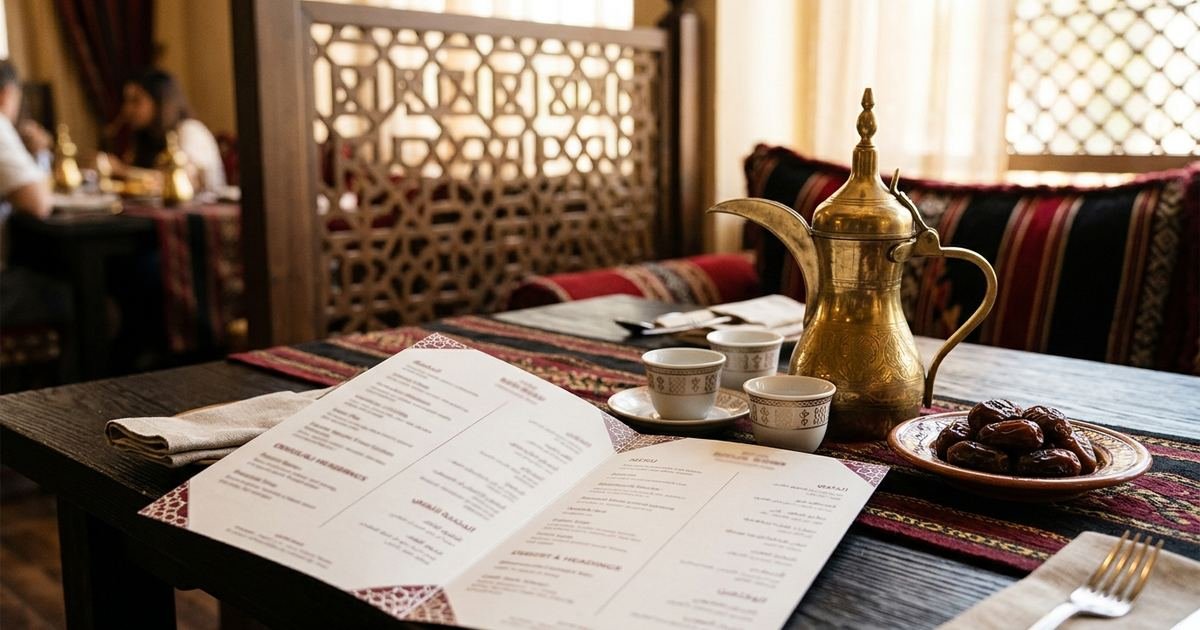
Restaurants and cafeterias in Dubai should have their menu in both Arabic and English: the Dubai Food Code (section 8.3) asks for the product menu to be printed in both languages. A good bilingual menu uses real Arabic dish names rather than transliteration, right-to-left layout for the Arabic, consistent prices in AED, and allergen and non-halal labels in both languages.
What the rules say about Arabic on menus
- Dubai Food Code, section 8.3: restaurants and cafeterias shall have their product menu printed in both Arabic and English. The same section asks for foods with allergens or non-halal ingredients to be clearly identified on the menu, and section 8.7.4 puts the non-halal notice on the first page.
- UAE Consumer Protection Law (Federal Law 15 of 2020): the price must be clearly shown, the invoice must be in Arabic, and data and advertisements given to consumers must be in Arabic, with other languages allowed alongside. Its executive regulation (Cabinet Decision 66 of 2023) sets fines of up to AED 100,000 for breaches such as a non-Arabic invoice.
Arabic and English side by side is the safe standard for a UAE menu, printed or digital.
This is a summary of official texts checked on 26 November 2026, not legal advice. Other emirates may have their own requirements.
Seven translation mistakes that cost you credibility
1. Transliteration instead of translation
"Shish tawook" written in Arabic letters as a sound-alike is not a translation. Most Levantine and Gulf dishes have an Arabic name guests already know: شيش طاووق, مشاوي مشكلة, فتوش. Use it. For international dishes (burger, pasta, sushi) the common Arabic loanword is fine: برجر, باستا, سوشي.
2. Word-for-word machine translation
Tools translate words, not dishes. "Chicken fingers" or "dragon roll" translated literally reads as nonsense. Translate what the dish is: "أصابع الدجاج المقرمشة" for chicken fingers works because it is the phrase guests use, while a literal translation of a brand-style name often does not. When in doubt, keep the name and add a short Arabic description.
3. Broken right-to-left layout
Arabic reads right to left. When it is pasted into a left-to-right layout, punctuation jumps to the wrong side, prices and numbers flip position, and words separate from their letters. Set Arabic text as right-to-left and check every line on the final print and on a phone.
4. Letters that do not join
Some design software shows Arabic as separate, unjoined letters. It looks like a font error to every Arabic reader. Use a proper Arabic font and software that supports Arabic shaping.
5. Different prices in the two columns
If the English side says AED 32 and the Arabic side still has last year's AED 29, guests will ask for the lower price. Keep one price per dish, shown once or identical in both languages, and update both together.
6. Descriptions only in English
A dish name in Arabic with its description only in English leaves Arabic readers guessing about what is in it. Translate the description too, especially ingredients guests care about: spice level, nuts, dairy, pork or alcohol.
7. Allergen and non-halal labels in one language
Allergen and non-halal information protects guests, so it must be understood. Put it in both languages, next to the dish, not only in a footnote.
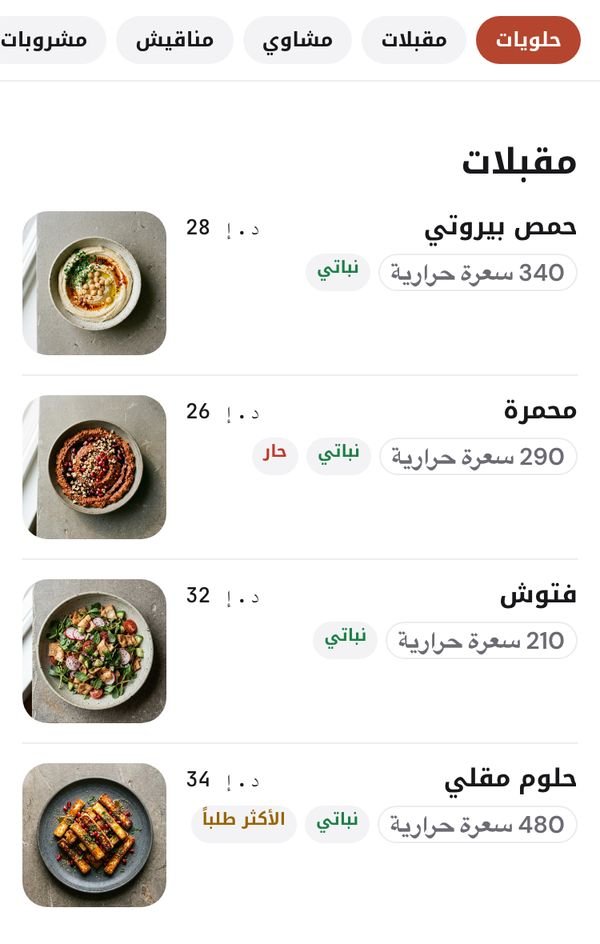
Checklist for a bilingual menu
- Every dish has an Arabic name a native speaker would use.
- Every description is translated, not just the name.
- Arabic is set right to left, in a real Arabic font, with letters joined.
- Prices are in AED, include VAT, and match in both languages.
- Allergens and non-halal items are marked in Arabic and English.
- A native Arabic speaker has read the whole menu before it is printed.
- The printed menu and the QR menu say exactly the same thing.
More than two languages
Dubai's guests read many languages. A digital menu can add a third language, for example Russian, Hindi, Urdu, Malayalam, Chinese or French, without making the printed menu longer, because each guest picks one language on their phone.
Arabic on WOW Table
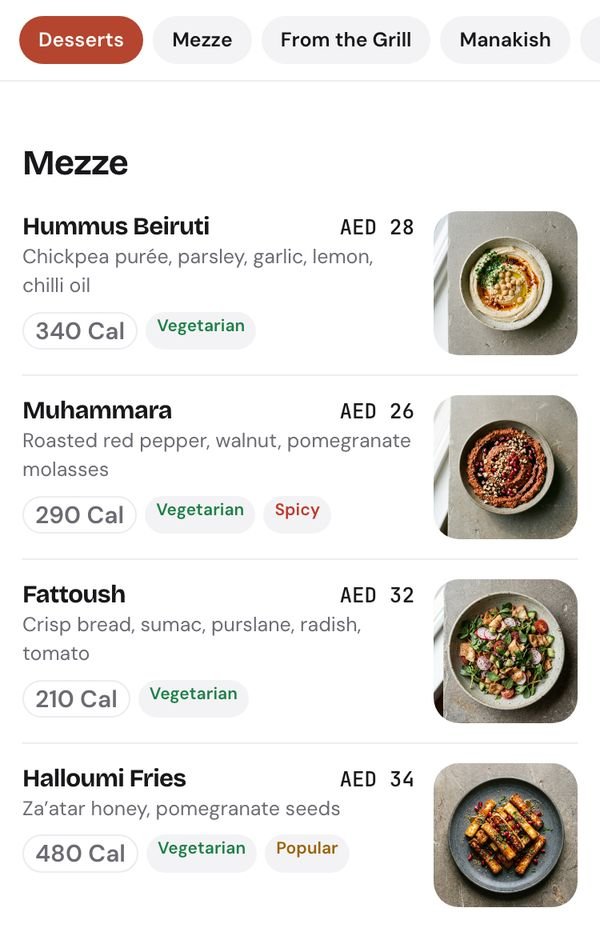
WOW Table menus come in English and Arabic as standard, with the guest switching between them with one tap, and the Arabic side shown right to left. When WOW Table reads your PDF or photos, it fills in Arabic names for each dish, which you then check and correct; we still recommend a native speaker reads them. A third language can be added on request, and you can print the menu with Arabic names from the same source so paper and phone always match. See your menu in Arabic and English.
Questions
Do restaurant menus in Dubai have to be in Arabic?
Yes. The Dubai Food Code (section 8.3) asks restaurants and cafeterias to have their product menu printed in both Arabic and English.
Is it enough to write English dish names in Arabic letters?
No. Transliteration is not translation. Use the Arabic name guests know for Arab dishes, the common loanword for international ones, and translate descriptions.
Must invoices be in Arabic in the UAE?
Yes. The UAE Consumer Protection Law (Federal Law 15 of 2020) says the invoice shall be in Arabic, and its executive regulation sets fines for breaches.
Should allergens be shown in Arabic too?
Yes. The Dubai Food Code asks for foods with allergens or non-halal ingredients to be clearly identified on the menu, so show them in both languages.
Can a QR menu replace the printed Arabic menu?
A QR menu can show both languages, but the Food Code refers to a printed menu in Arabic and English, so keep printed menus available, made from the same source.
Sources
- Dubai Municipality: Food Code (2013), sections 8.3 and 8.7.4
- UAE Federal Law No. 15 of 2020 on Consumer Protection (Ministry of Economy, unofficial English translation)
- UAE Cabinet Decision No. 66 of 2023, executive regulation of the Consumer Protection Law
Checked 27 Nov 2026. Rules and prices change, so check the source before you rely on it.